Things to Do in Turkey in October
October weather, activities, events & insider tips
Shoulder Season · Good Value
October Weather in Turkey
Long-run averages for October in Istanbul
68°F (20°C)
High Temp
56°F (14°C)
Low Temp
2.3 inches (58 mm)
Rainfall
76%
Humidity
4
Sunny-Day UV
⚠ Istanbul's October rain tends to arrive in sudden, concentrated downpours rather than steady drizzle, in the second half of the month. Streets in hilly neighborhoods like Cihangir and Balat flood briefly during heavy bursts. The Karaköy waterfront can get enough spray during a Bosphorus storm to soak anyone standing near the ferry terminals. Carry your rain layer every day from mid-October onward. No exceptions.
⚠ Fog occasionally settles over the Bosphorus in late October mornings, which can delay or cancel ferry services between the European and Asian sides of Istanbul. If you have a morning flight from Sabiha Gökçen Airport on the Asian side, build extra time into your crossing. Better yet, stay on that side the night before. Play it safe.
Making the most of October in Turkey? Browse tours and activities in Turkey on GetYourGuide.
Is October Right for You?
Weigh the advantages and considerations before booking
Advantages
- + Istanbul's average high of 20°C (68°F) in October sits in a narrow sweet spot. You can spend six hours walking the Sultanahmet district or climbing the steep cobblestone lanes of Balat. The July heat turns those same walks into endurance tests. The summer crowds at Hagia Sophia and the Blue Mosque thin noticeably after the first week. The softer autumn light through Istanbul's stained glass and Byzantine mosaics is better than anything the harsh summer sun produces.
- + Turkey's Aegean and Mediterranean coasts remain swimmable through at least mid-October. Sea temperatures around Kaş, Fethiye, and the Bodrum peninsula hover near 23°C (73°F) into the second week. That is warm enough to snorkel the sunken ruins at Kekova without a wetsuit. By late October the water cools and the beach towns begin their winter shutdown. Early-October visitors catch the tail end of coastal life with a fraction of the August crowds.
- + Cappadocia's balloon season runs strongest in October. The still, cool dawn air over Göreme, typically 8-10°C (46-50°F) at launch time, produces some of the most reliable flying conditions of the year. The valleys below have turned amber and rust where the vineyards change. Fewer cancellations than spring. Fewer passengers per flight than summer. The tufa rock formations catch the low-angle October sun in ways that midsummer's overhead light simply cannot match.
- + Shoulder-season pricing across most of the country drops meaningfully from the July-August peak. Accommodation in Cappadocia's cave hotels, boutique pensions along the Lycian coast, and even Istanbul's better-located Beyoğlu hotels tends to be noticeably cheaper than summer rates. Availability opens up for properties that book out months in advance during high season. Domestic flights between Istanbul, Antalya, and Kayseri also run lower. You can often find next-day availability on routes that sell out weeks ahead in summer.
Considerations
- − Rain arrives with real intent in Istanbul by mid-October. The city's 58 mm (2.3 inches) monthly average masks the pattern. Most of it falls in concentrated downpours during the second half of the month. The hilly streets of Beyoğlu and Cihangir become slick cobblestone chutes. Outdoor dining along the Bosphorus waterfront restaurants in Ortaköy and Bebek gets interrupted. The Grand Bazaar's covered lanes, usually oppressively warm in summer, become the default refuge for everyone at once.
- − Daylight contracts fast. By late October, Istanbul loses usable outdoor light by 6 PM. This cuts short the golden-hour views from Galata Tower and the Süleymaniye Mosque terrace that summer visitors take for granted. If you are planning a Cappadocia itinerary that includes both a dawn balloon flight and an afternoon hike through the Rose Valley or Ihlara Canyon, the compressed daylight means choosing one major activity per day. Do not try to stack two.
- − The eastern half of the country, Southeastern Anatolia, the area around Mardin, Şanlıurfa, Mount Nemrut, starts getting cold by late October. Overnight temperatures drop toward 5°C (41°F) at elevation. Some mountain passes become unreliable. If your itinerary extends beyond the Istanbul-Cappadocia-coast triangle, you will need serious layering and flexibility. Rural accommodation in the east thins out after the summer trekking season ends.
Short on time in October? See day trips around Turkey on GetYourGuide.
Best Activities in October
Top things to do during your visit
October settles over Turkey like a long exhale after the scorching summer. Daytime highs hover around 20°C, warm enough for shirtsleeves along the Bosphorus promenade but cool enough that the limestone amphitheatres of the Aegean coast no longer radiate stored heat back at you. The light shifts, too: Istanbul's minarets and the travertine shelves of Pamukkale catch a lower, more golden afternoon sun that photographers wait all year for. Rainfall picks up modestly compared to the bone-dry August, averaging around 58 mm for the month, typically arriving as brief showers that leave the air smelling of wet pine and damp stone rather than settling in for days. The swimming season along Turkey's Mediterranean and Aegean shores is winding down but not yet over. Water temperatures off Antalya and Bodrum hold warmth from the summer months, and beaches that were shoulder-to-shoulder in July thin out to a scattering of towels. What makes Turkey in October distinct is the shift in who occupies the country. The charter-flight crowds recede, and the rhythms of Turkish daily life reassert themselves. In Istanbul's market districts, vendors stack pomegranates in crimson pyramids and roast chestnuts on blackened drums, the sweet smoke curling through the steep lanes of Beyoğlu. Along the Aegean, olive harvest preparations begin, and roadside stalls sell the season's first pressing in recycled water bottles, thick and green-gold, peppery on the tongue. The pace at archaeological sites like Ephesus drops to something manageable: you can stand in the Library of Celsus without a tour group filling every sightline. For travelers weighing when to visit, October sits in a productive overlap, warm enough for outdoor exploration across the country's enormous geography, from the rock formations of Cappadocia to the tea plantations along the Black Sea. Yet past the peak-season congestion and premium pricing that define June through August. Safety for travelers remains consistent with Turkey's well-established tourism infrastructure: the country receives tens of millions of visitors annually, and the principal tourist corridors from Istanbul to the coast are thoroughly served by domestic flights, intercity buses, and a growing high-speed rail network. For anyone building a week-long itinerary, October rewards a split between Istanbul and either the Aegean archaeological belt or the Cappadocian interior. The food alone justifies the trip: Turkey's culinary tradition runs far deeper than the kebab shorthand, encompassing Black Sea anchovy dishes, Hatay-style spiced flatbreads pulled from wood-fired ovens, and the elaborate meze spreads of the Aegean coast, where each small plate carries the tang of sumac, the silkiness of smoked eggplant, or the sharp brine of aged white cheese. The country's restaurant culture ranges from five-seat lokantas serving a single stew to multi-course tasting menus in converted Ottoman mansions, and October's cooler evenings make the heavier Anatolian dishes, slow-braised lamb shanks and lentil soups fragrant with dried mint, feel right again after months of salads and grilled fish.
Small Group Tour for Cruise Passengers
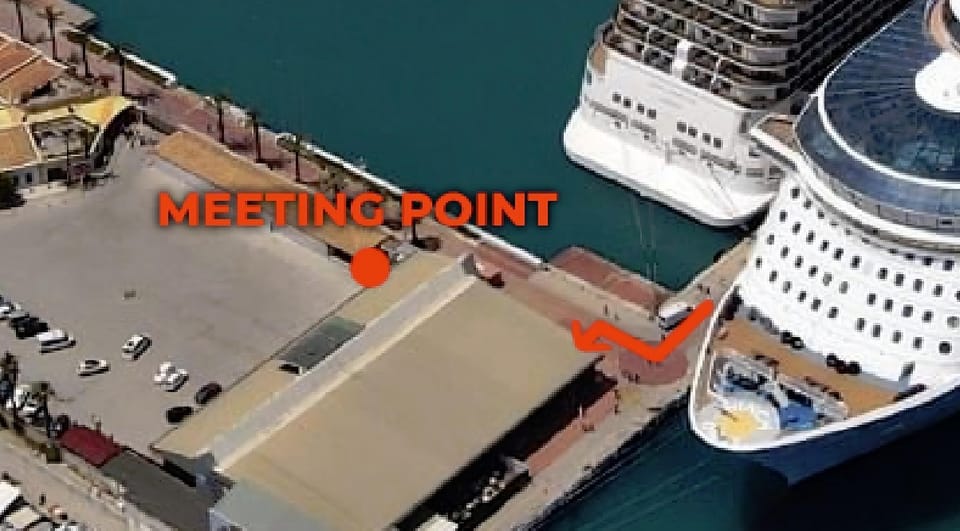
cruiseThis half-day group tour is designed specifically for cruise passengers docking at Istanbul's port, calibrated to the tight turnaround that ship schedules demand. A small group, capped to keep the experience conversational rather than herd-like, covers the historic peninsula's marquee sights: the soaring interior of the Blue Mosque, where thousands of Iznik tiles in turquoise and cobalt catch the light filtering through 200 stained-glass windows, and the Hippodrome, where you can run your fingers along the weathered bronze of the Serpentine Column, a piece of metal that has stood in the same spot since it was hauled from Delphi in the fourth century. The guide bridges the logistics gap that solo cruise visitors struggle with, handling the route from port to old city and back within the ship's window.
It solves the central problem of a cruise stop in Istanbul, compressing the city's most historically dense square mile into a guided circuit that respects your sailing time.
Insider tip: Request a morning departure slot if your ship offers one. The Blue Mosque courtyard is quieter before midday prayers, and the light inside the dome is at its most diffuse and photogenic in the first hours after opening.
This month: October cruise itineraries in the eastern Mediterranean frequently include Istanbul as a port call, and the cooler 20°C daytime temperatures make the walking-heavy route far more comfortable than the same circuit in the 29°C heat of July or August.
Private Ephesus, Virgin Mary Tour No Hidden Fees
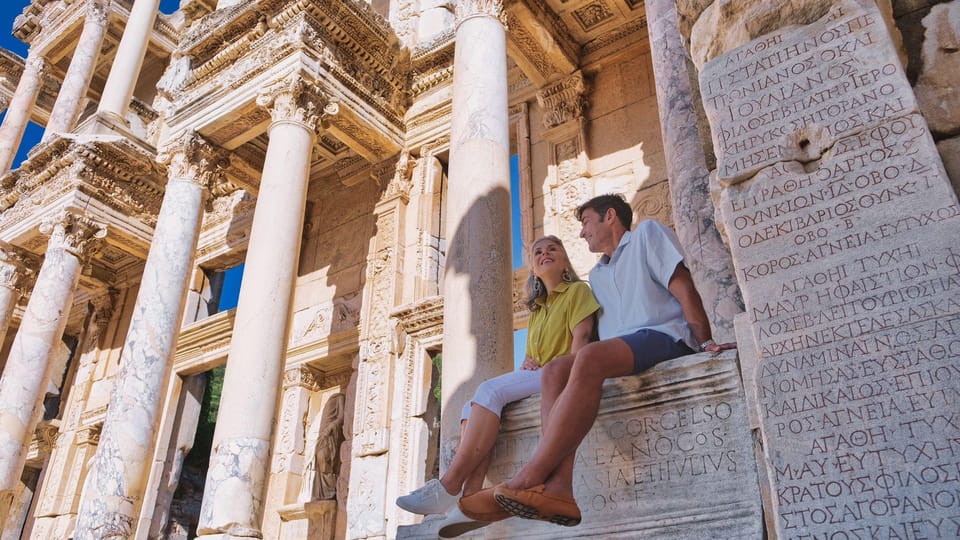
guided_experienceA private vehicle carries you from the Kusadasi cruise port or your Selçuk hotel directly to the gates of Ephesus, one of the most completely excavated Greco-Roman cities on earth. Walking the marble-paved Street of the Curetes, your footsteps echo against columns that still bear carved reliefs of Nike and Hermes, and the façade of the Library of Celsus rises at the end of the avenue with a grandeur that photographs consistently understate. The itinerary adds the House of the Virgin Mary, a small stone chapel set in the forested hills above Ephesus where the air is noticeably cooler and heavy with the scent of pine resin, a site venerated by both Christian and Muslim traditions. The private format means you set the pace: linger at the terrace houses where Roman-era frescoes in ochre and cinnabar survive on the walls, or move briskly if the ship's schedule presses.
Ephesus is Turkey's single most important classical archaeological site, and a private guide with no hidden surcharges lets you absorb it at your own rhythm rather than being swept along by a 40-person group.
Insider tip: Ask the guide to take you through the terrace houses, the roofed excavation on the slope above the main street, where the domestic frescoes and mosaic floors are better preserved than anything on the open-air route and far less crowded.
Gallipoli Full-Day Tour from Istanbul
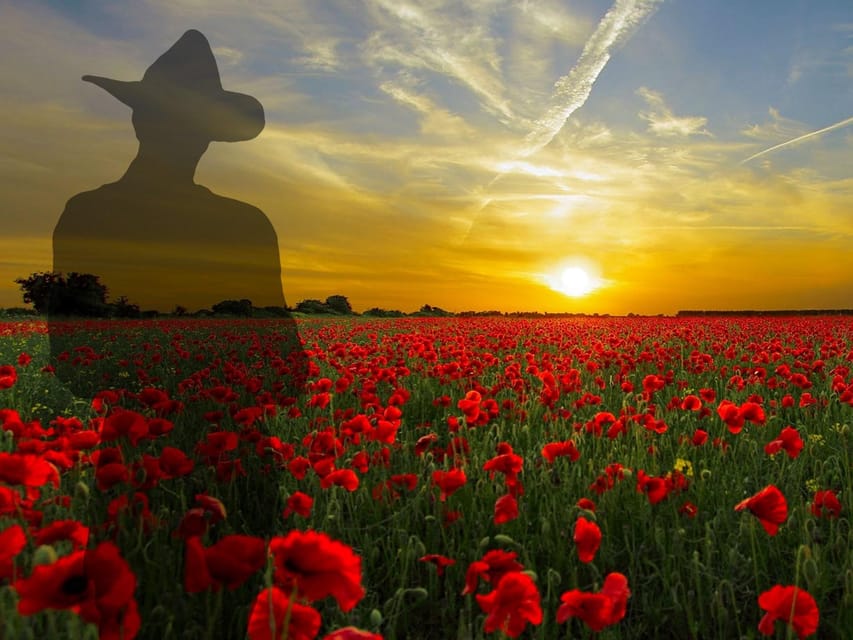
day_tripThis full-day expedition departs Istanbul before dawn, crossing the Dardanelles by ferry as the first grey light spreads over the strait, the salt air sharp and bracing on the open deck. On the Gallipoli peninsula, the landscape is deceptively quiet: low scrubland, pine woods, and narrow coves where the water runs a deep transparent green over sandy bottoms. The guide walks you through Anzac Cove, Lone Pine, and Chunuk Bair, sites where the terrain itself tells the tactical story. You feel the steepness of the ridges the Anzac forces tried to climb, see how narrow the beach was where they landed, and stand at the cemetery at Lone Pine where rows of white headstones sit under the sighing canopy of Aleppo pines. The drive from Istanbul is long, roughly five hours each way. But the day is structured to use that transit for historical context, arriving at the peninsula with a framework that makes the landscape legible.
Gallipoli is one of those rare battlefields where geography and history fuse so completely that standing on the ground rewrites your understanding of the campaign in a way no book or documentary can.
Insider tip: Bring a windbreaker even on a warm October day. The Dardanelles strait funnels wind across the peninsula, and the exposed memorial sites at Chunuk Bair can feel ten degrees cooler than sheltered Istanbul.

Private and Guided Istanbul Food Tour: Taste of Istanbul
foodThis guided food tour threads through Istanbul's backstreet kitchens and neighbourhood markets, stopping at places that serve the city rather than its tourists. You might find yourself standing at a counter in Kadıköy where a cook slaps rounds of lahmacun onto the curved wall of a wood-fired oven, the dough blistering and charring in seconds, then pulls each one out glistening with spiced lamb and a squeeze of lemon so tart it makes your eyes narrow. Another stop might be a decades-old lokanta where the day's stew, perhaps a lamb and quince combination fragrant with cinnamon and black pepper, simmers in a copper pot behind glass. The guide contextualises each dish within Turkey's regional culinary geography: the chilli heat of the southeast, the butter-and-bread simplicity of the Black Sea, the olive-oil-forward meze tradition of the Aegean. October is when Istanbul's food calendar pivots from summer's raw salads and cold mezes back toward the warming dishes that define Turkish comfort cooking.
Istanbul's food culture is one of the deepest and most regionally varied of any city on earth, and a local guide gets you past the tourist-facing kebab houses into the kitchens where the city eats.
Insider tip: Arrive hungry and skip breakfast entirely. The portion count across stops is generous, and pacing yourself from the first bite ensures you can still appreciate the final course rather than waving it off.
This month: October is when Istanbul's food calendar pivots from summer's raw salads and cold mezes back toward the warming dishes that define Turkish comfort cooking.

Turkish Carpet Rug Weaving Workshop (Halı Kilim Dokuma Atölyesi)
otherIn a workshop tucked into one of Turkey's traditional weaving districts, you sit at a loom and learn the double-knot technique that distinguishes Turkish carpets from their Persian and Central Asian cousins. The instructor places your fingers on the warp threads, and you feel the tension of the cotton or wool under your hands as you tie each knot, pull it tight, and watch a single row of pattern emerge with agonising slowness, a pace that recalibrates your respect for the finished carpets hanging in every Grand Bazaar shop. The dyes come from natural sources: madder root for the deep reds, indigo for blue, walnut husk for brown, and the instructor shows you how to identify natural versus synthetic dyes by the slight irregularity in natural colour, a warmth and variation that synthetics flatten. The smell of raw wool and lanolin hangs in the air, and by the end of the session you have produced a small swatch that is unmistakably handmade, imperfect, and yours.
Turkish carpet weaving is a living craft tradition stretching back centuries, and this workshop lets you understand through your hands why a genuine hand-knotted rug costs what it does.
Insider tip: Wear comfortable clothes you do not mind getting dusty. The raw wool sheds fibres, and the natural dyes, the walnut, can stain fingertips for a day or two.

Basilica Cistern (Private Guide & No waiting) Ticket not included
private_tourThe Basilica Cistern sits beneath Istanbul's streets like a drowned cathedral. You descend a stone staircase and the city noise cuts out, replaced by the steady drip of water echoing off 336 marble columns rising from a shallow, still pool that reflects them in wavering doubles. The air is cool and faintly damp, carrying the mineral smell of old stone and standing water, a sharp contrast to whatever the weather is doing at street level. A private guide walks you through the engineering: how Justinian's builders in the sixth century repurposed columns scavenged from ruined temples across the empire, including the two famous Medusa heads at the base of columns in the far corner, one turned sideways, one inverted, their purpose still debated. The recent restoration cleaned the columns and improved the lighting, which now picks out the carved Corinthian capitals and the herringbone brickwork of the vaulted ceiling. Without a guide, these details blur into atmosphere. With one, each column becomes a specific story about Roman salvage, Byzantine hydraulic ambition, and the layers of civilisation stacked beneath modern Istanbul.
It is the single most atmospheric interior space in Istanbul, an underground forest of columns and water that feels like stepping into a different century, and a private guide turns the atmosphere into comprehension.
Insider tip: Visit in the late afternoon, an hour or so before closing. The morning tour groups have cleared out, and the diminished crowd lets you hear the water drip and echo the way the space was meant to sound.
This month: The cistern's underground location keeps its interior temperature nearly constant year-round, making it a useful refuge on the occasional rainy October afternoon when the 58 mm monthly average delivers one of its brief showers.
Where to Stay in Turkey in October
Hand-picked hotels across price tiers for October travellers.
★★★★★
Luxury
Hagia Sofia Mansions Istanbul, Curio Collection by Hilton
From $222 / night
Check Prices on Trip.com →
Public Holidays in October
Dates that affect opening hours, transport and crowds
Cumhuriyet Bayramı
Known in English as Republic Day. Observed nationwide as a public holiday.
Cumhuriyet Bayramı
Known in English as Republic Day. Observed nationwide as a public holiday.
Cumhuriyet Bayramı
Known in English as Republic Day. Observed nationwide as a public holiday.
Packing Checklist
Bookmark this page — your progress is saved between visits
Need the full list with shopping links?
Climate-specific gear, brand recommendations, and what to leave at home.
View Turkey Packing List →Essential Tips
Insider knowledge and common pitfalls to avoid
Insider Knowledge
The bonito run up the Bosphorus in October is the single most important food event in Istanbul's calendar. Most tourists miss it entirely. It does not appear in any guidebook's October section. Palamut, Atlantic bonito, migrates through the Bosphorus strait in autumn. For a few weeks the fish markets in Karaköy and Kadıköy pile high with silver-flanked fish. Istanbullus eat them grilled, cured, pickled, and pan-fried. Ask for palamut at any waterfront restaurant in October. You will get a knowing nod and the freshest fish of your trip. If nobody offers it, you are in the wrong restaurant.
Turkey's safety profile for travelers in 2026 is broadly stable in the western tourist corridor: Istanbul, Cappadocia, the Aegean and Mediterranean coasts. The southeastern border regions near Syria remain areas most foreign ministries advise against. In the main tourism zones, practical safety concerns match those in southern Europe. Petty theft in crowded markets. Taxi overcharging (insist on the meter or use the BiTaksi app). Aggressive carpet-shop touts in Sultanahmet who want to serve you tea and sell you a rug. Violent crime against tourists is rare. Arrange travel insurance covering medical evacuation regardless. Turkish hospitals in Istanbul and Antalya are competent. Rural facilities are limited. A helicopter transfer from a Lycian Way injury to Antalya runs into serious money.
With one week in October, the highest-value itinerary is three nights Istanbul, two nights Cappadocia, two nights Aegean coast (Selçuk for Ephesus, or Fethiye for the Lycian Way). Domestic flights between Istanbul and Kayseri (for Cappadocia) and between Istanbul and İzmir or Dalaman (for the coast) are short, frequent, and affordable in October. Adding Pamukkale and Antalya to a seven-day trip turns every day into a transit day. Save those for a return visit.
October's shoulder-season pricing makes Cappadocia's cave hotels accessible at rates summer visitors would not recognize. These are carved into actual tufa rock with arched ceilings and kilim rugs on stone floors. The same room that books out four months ahead in August may have same-week availability in mid-October. This is the month to stay in the property that defines the Cappadocia experience. Do not settle for a conventional hotel on the outskirts of Göreme.
Avoid These Mistakes
Do not pack only summer clothes because Turkey is a Mediterranean country. Istanbul in late October chills down after sunset. 14°C (56°F) with Bosphorus wind feels colder than the number suggests. Cappadocia's dawn balloon launches at 8°C (46°F) will make you regret leaving the fleece at home. The Mediterranean coast is warm. The rest of the country is not the beach holiday some travelers expect.
Do not spend the entire trip in Istanbul. Istanbul deserves three full days, possibly four. Turkey's October is at its best outside the city. The Aegean coast is emptier and warmer. Cappadocia's skies are clearer. The archaeological sites along the southern coast are finally cool enough to explore properly. Travelers who never leave Istanbul miss the landscape that makes Turkey extraordinary: the surreal valleys of Cappadocia, the turquoise coast between Fethiye and Kaş, the vertigo of standing in the theatre at Ephesus and realizing twenty-five thousand people once sat where you are standing.
Do not assume you can wing it during Republic Day week (October 29). Domestic flights and intercity buses fill with Turkish families traveling for the holiday. Popular Cappadocia balloon operators reduce their October 29 slots for maintenance windows before winter. Book transport and key activities around that date at least two weeks ahead. Restaurants in tourist areas may also switch to fixed holiday menus.
Ready to plan your trip to Turkey?
Now that you've got the research covered, here's where to go next.
Explore More Activities in Turkey
Didn't see anything interesting yet?
Browse Viator's full catalog of tours, day trips, food experiences, and private guides in Turkey.
See All Turkey Tours on Viator